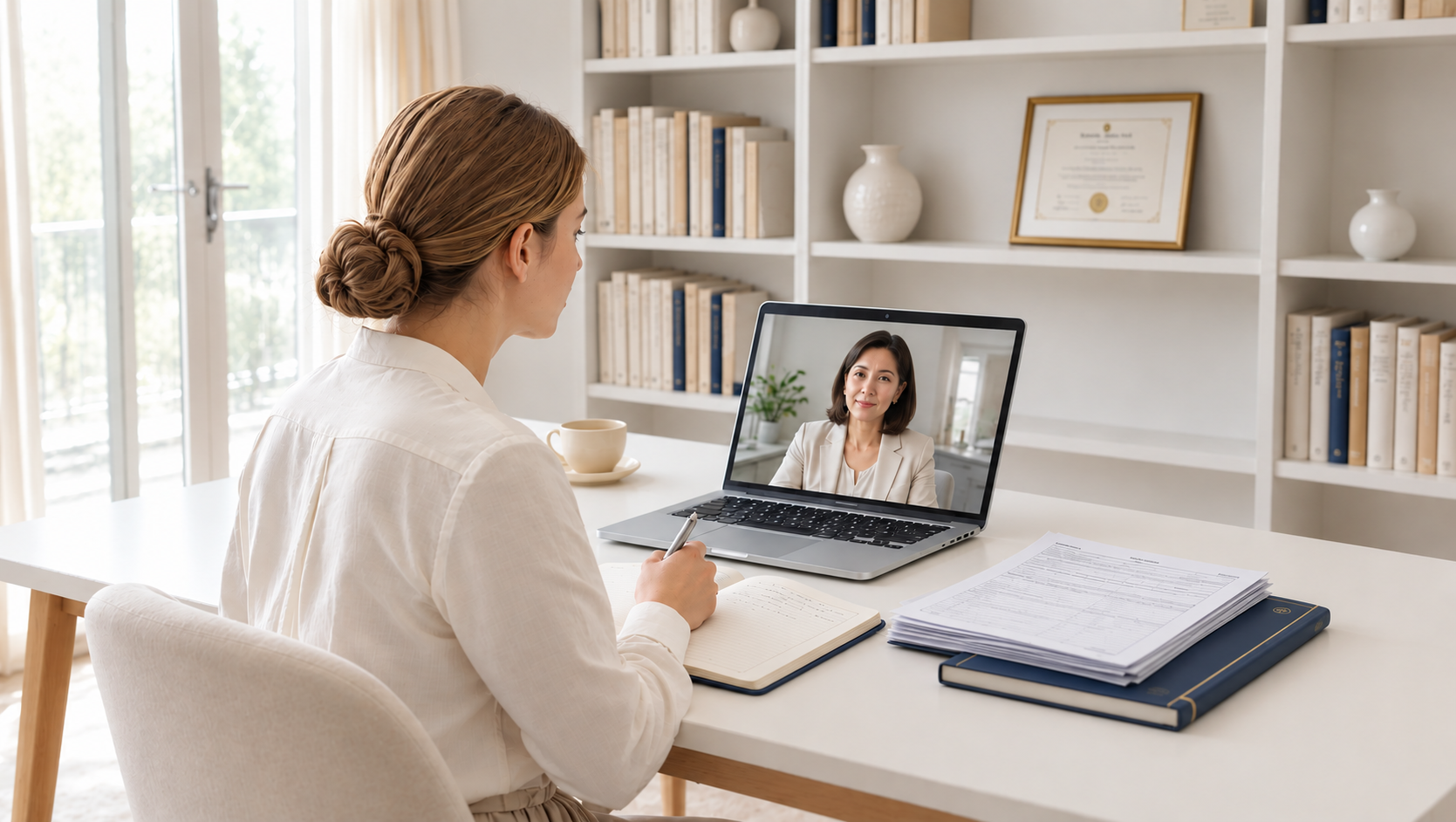
At the International College of Naturopathic Science (ICNS), every student completes their clinical training through the Virtual Clinical Pathway. You are mentored on complex cases, observe expert case-taking, and have your own consultations reviewed by approved supervisors, through a combination of real client consultations and structured case work. You progress by demonstrating competence against a clinical logbook, not by counting hours, and you are signed off when you are ready. Here is how it works, and why it was designed this way.
Why the learning environment matters
A clinic’s location can shape the cases available to students. The clients who attend, the concerns they bring, and the opportunities available during a particular period all influence what students observe.
The Virtual Clinical Pathway takes a designed approach. Rather than relying only on the cases that happen to present at one physical clinic, supervised learning draws on a broader range of case material and learning objectives.
This gives students structured opportunities to examine complex case presentations, discuss clinical reasoning with a supervisor, work towards clear logbook competencies, and receive feedback that shows them what they are doing well and where to develop further.
The value of the Virtual Clinical Pathway lies in this deliberate approach to clinical learning.
Designed for depth, not convenience
Clinical work often involves several concerns at once, incomplete information, and uncertainty about the next appropriate step. Students need opportunities to practise organising information, identifying risks, and explaining the reasoning behind their decisions.
Through structured case work, students consider questions such as:
• What information is important to establish first?
· What requires referral or further medical assessment?
· How do the client’s concerns and history fit together?
· Which recommendations are relevant to the reasons the client has presented?
· How will progress be reviewed?
These questions move learning beyond recalling information. They help students apply knowledge carefully, develop clinical judgement, and recognise the boundaries of their role.
Realistic case work
Clients do not always present with a complete history, follow every recommendation, or explain every concern at the first appointment. The Virtual Clinical Pathway includes realistic case behaviour, including partial disclosure, non-compliance, and treatment negotiation.
This gives students experience of the conversations and decisions that arise in practice. They learn how to respond professionally, maintain clear boundaries, and adapt recommendations within their scope of practice.
Realistic case work also gives supervisors meaningful opportunities to assess how students apply their learning. Progress is then assessed against the competencies in a clinical logbook.
Competency, not hours
Competence is shown by what a student can do, safely and systematically.
Progress through the Virtual Clinical Pathway is assessed against the competencies in a clinical logbook. Students progress according to what they demonstrate, however quickly or slowly they get there. Students receive feedback from approved supervisors, address areas for development, and are signed off once they meet the required standards.
Assessment serves two purposes. It confirms what a student can do, and it identifies where further guidance will strengthen their clinical capability. The focus is on developing the competence required for responsible practice.
Individual hands-on experience
The Virtual Clinical Pathway is complete in itself. CP1 and CP2 can be completed remotely with full supervision, so every student, wherever they live, can complete thorough clinical training without depending on travel. This was a deliberate choice, made for access, flexibility and quality: a designed pathway gives every student a consistent depth and range of supervised cases.
Hands-on, in-person experience builds on that foundation. Students who have been mentored on complex cases, observed expert case-taking and had their own case-taking reviewed arrive in any clinical setting with a strong baseline, ready to make the most of it.
For many students, the Virtual Clinical Pathway is all they need to meet the competencies and graduate with confidence. Where ICNS identifies that in-person experience would strengthen a particular student’s development, it is arranged with them individually, shaped to their progress and circumstances. Read more in How ICNS Supports Every Student to Clinical Competence.
The clinical model behind ICNS training
ICNS uses an online learning model that combines structured learning, supervised clinical application, and competency-based progression. The Virtual Clinical Pathway is the complete clinical core of every ICNS programme.
The quality of clinical training depends on how it is designed, how students are supervised, and how their clinical skills are assessed. ICNS brings these elements together so students can develop and demonstrate the capabilities required for practice.
ICNS trains students to practise as naturopaths, herbal medicine practitioners, nutritional medicine practitioners and mind-body medicine practitioners and, through that training, as Integrative Health Practitioners. Programmes are delivered online and accredited across 36 countries through the International Institute for Complementary Therapists (IICT). Each Bachelor and Advanced Diploma is a full three-year programme, built on more than two decades of curriculum development, with intensive and part-time pathways available. ICNS prepares practitioners to work responsibly alongside GPs, with measurable, accountable outcomes within a defined scope of practice.
To see how structured clinical reasoning fits into this approach, explore The SAFE Method: How ICNS Students Learn to Consult Safely and Systematically.
What your clinical training involves
Students develop and demonstrate the ability to conduct safe consultations, build a complete clinical picture, make focused recommendations, review progress, and communicate clearly with GPs.
The Virtual Clinical Pathway makes this possible through complex case work, supervisor mentoring, realistic case behaviour, logbook competencies, and individual feedback. It is designed to develop and assess the skills needed for responsible clinical practice.
You are welcome to explore Our Clinical Approach page and download our Course Handbook to learn more about the curriculum, clinical training, and study requirements.
Clinical Approach →
Course Handbook →
If you would like to understand how the Virtual Clinical Pathway could fit your goals, send ICNS a direct message. We are happy to answer your questions and help you consider what to look for in a clinical training programme.